
Virginia Home Funeral Legal Overview
Families Can Care for Their Own Dead
Virginia law allows families or designated agents to care for, prepare, transport, and bury a loved one without hiring a funeral director or funeral home. There is no state law requiring a licensed funeral director to be involved in all funeral activities. This includes keeping the body at home, preparing the body, holding a viewing or ceremony, and arranging burial or cremation, although crematories may have their own policies.
Death Certificates and Paperwork
A death certificate must be completed and filed within three days of death and before final burial or cremation. The next of kin, a designated agent, or a funeral director may handle this. Paper filing is allowed for families. If the body is transported out of Virginia, a transit permit is required; no permit is needed for transport within the state.
Embalming
Embalming is not required by Virginia law. If a body is held in a funeral establishment for more than 48 hours, refrigeration or embalming is required, and embalming cannot be performed without permission from the next of kin. Families providing care at home may use cooling methods such as dry ice or refrigeration.
Home Burial
Virginia law does not prohibit burial on private property. However, local zoning laws and ordinances may apply, so families should check with local authorities before planning a home burial.
Who Has Legal Authority
Virginia law allows a person to designate an individual in advance to handle funeral and disposition arrangements through a signed and notarized document. This person has priority over family members. If no designation exists, the law provides a next-of-kin hierarchy for decision-making.
Home Funerals: An Informational Guide
What Is a Home Funeral?
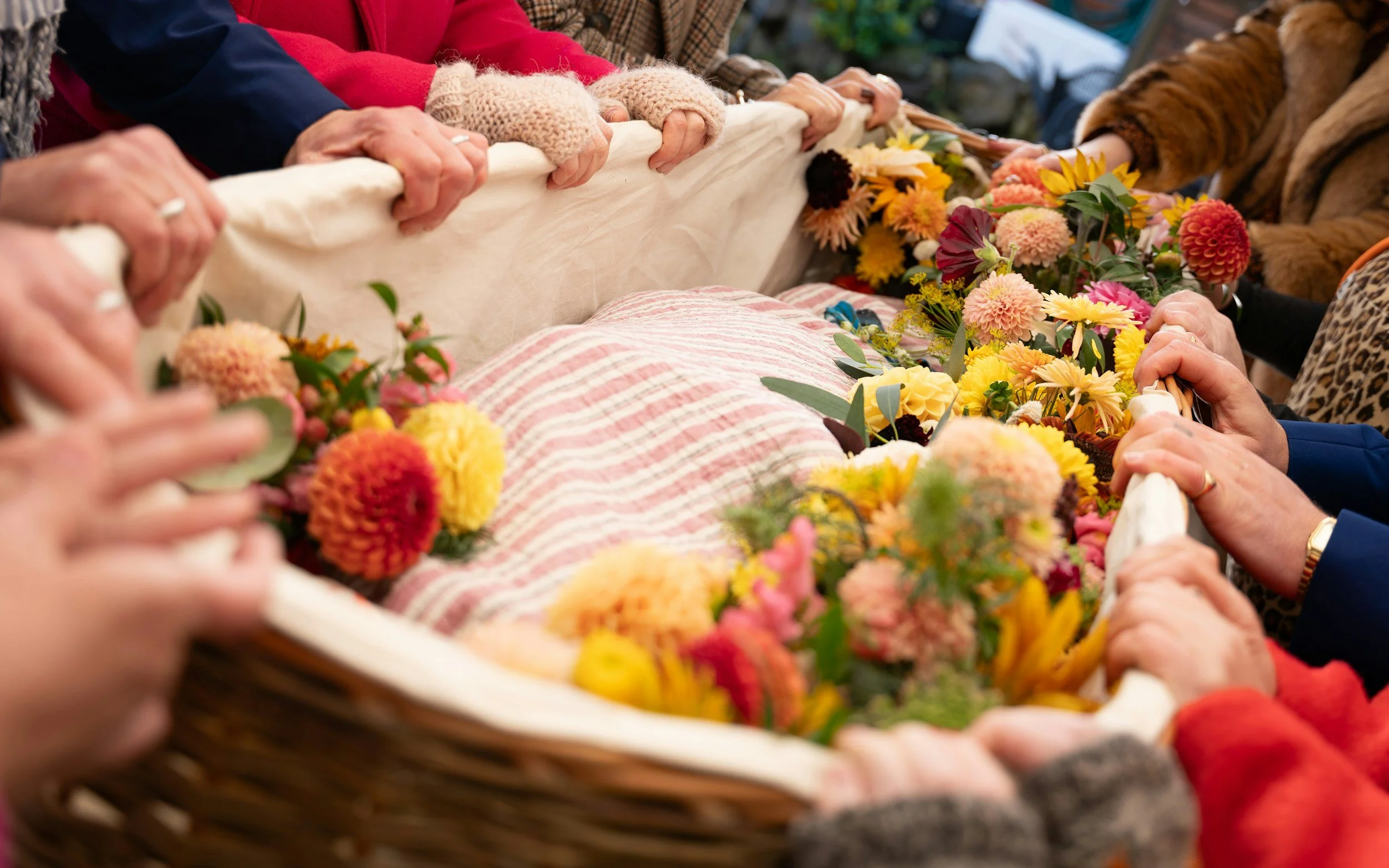
A home funeral is a family-directed and hands-on farewell that takes place in a home or other meaningful space. Instead of immediately transferring a loved one into commercial care, families may spend time with the body, provide care, and hold ceremonies in a familiar environment. Home funerals emphasize connection, participation, and personal choice.
Is a Home Funeral Legal in Virginia?
Yes. Virginia law supports family-directed care of the dead. Families may care for the body at home, prepare and dress the deceased, hold gatherings or ceremonies, and transport the body for burial or cremation, as long as required paperwork is completed properly.
Why Consider a Home Funeral?
Emotional closeness
Families have unhurried time with their loved one in a familiar setting.
Family involvement
Loved ones can participate in care, rituals, and ceremonies.
Cost savings
Many funeral home service fees can be reduced or avoided.
Personalization
Ceremonies and care reflect personal, cultural, or spiritual values.
Because you can; it’s your legal right!
Key Legal Steps in Virginia
1. File the Death Certificate
Must be completed and filed within three days and before burial or cremation.
2. Body Care
Embalming is not required. Cooling methods may be used at home.
3. Transportation
No permit is needed for transport within Virginia. A permit is required to leave the state.
4. Burial or Cremation
Home burial may be permitted depending on local rules. Crematories may have individual policies.
Who Makes the Decisions?
A designated agent named in a notarized document has legal authority. Otherwise, next of kin follow a legal order of priority.
Helpful Planning Tips
Learn the paperwork process in advance
Understand body care and cooling techniques
Check local zoning if considering home burial
Consider completing advance funeral designations
A Short History of Home Funerals
Historically, funerals were family and community events centered in the home. Across cultures and throughout much of human history, family members cared for their dead, washed and dressed the body, and held wakes or vigils in the home before burial. The rise of the professional funeral industry in the early 20th century shifted these practices toward institutional care, resulting in the perception that families could not legally or practically care for their own dead without a funeral home. Home funerals existed in nearly every American household until the Civil War era and were the norm for most of the 19th century.
Today’s home funeral movement supports a revival of that tradition, emphasizing autonomy, dignity, community, and connection in the care of loved ones after death.
Resource List
Legal and Regulatory Resources (Virginia)
Virginia Funeral Resources & Education — information on funeral laws and rights to care for your own dead.
Virginia Department of Health — death certificates, filing requirements, and regulatory forms.
Virginia administrative funeral regulations (18VAC65) — details on embalming and disclosure requirements.
Home Funeral Organizations and Guides
National Home Funeral Alliance — education, community support, and advocacy for home funerals.
Home Funeral Guidebook (NHFA) — practical guidance on planning and conducting a home funeral.
Funeral Consumers Alliance — information on arranging home funerals and consumer rights.
General Funeral Law Reference
Nolo’s overview of Virginia home funeral and funeral law basics.